


Emergency treatment of acute ammonia poisoning
Prone environment
Workers in the chemical industry know that ammonia (NH3) is a colorless irritating gas with a pungent and pungent odor at normal temperature and pressure; it is easily liquefied into a colorless liquid, easily soluble in water and ethanol, and its aqueous solution is Ammonia: People can feel uncomfortable when the ammonia concentration reaches 140mg/m3~210mg/m3. When it reaches 553mg/m3, there will be strong irritation symptoms, and the concentration of 3500mg/m3~7000mg/m3 can immediately die.
Occupational acute ammonia poisoning accidents often occur in accident sites where workers contact ammonia pipelines, ammonia storage cylinders or storage tanks accidentally broken and burst, or in the on-site environment where liquid ammonia escapes due to careless maintenance work. It can also occur in the manufacture of various fertilizers such as ammonium sulfate, ammonium bicarbonate, urea, ammonia, etc., and various organic chemical industries such as alkali making, pharmaceuticals, tanning, plastics, resins, dyes, explosives, synthetic fibers, etc., used as refrigerants, Antifreeze, petroleum refining, steelmaking and other industries during production operations.
Due to the accident site of ammonia leakage, the maximum allowable concentration of ammonia in the air of the production workshop is 30mg/m3, so ammonia and air can form an explosive mixture, which can cause combustion and explosion when exposed to open flames and high heat. Violent contact with fluorine, chlorine, etc. Chemical reaction, if encountering high heat, the internal pressure of the container increases, there is a danger of cracking and explosion at any time.
Preliminary judgment of poisoning
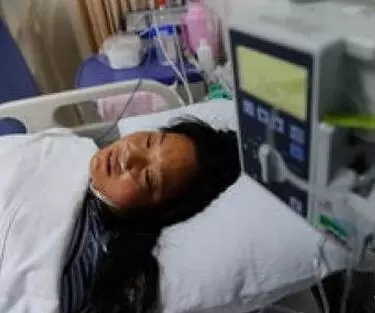
First of all, as long as the environment is susceptible to occupational acute ammonia poisoning as described above, or the production process can produce ammonia, or smell the colorless irritating gas odor with pungent irritating odor, tearing and swallowing may occur. Eye and upper respiratory tract irritation symptoms such as pain, hoarseness, cough, sputum, etc., must be considered for the possibility of acute ammonia poisoning. If possible, the air at the accident site should be tested as soon as possible, and attention should be paid to distinguish acute ammonia poisoning from acute chlorine poisoning, acute sulfur dioxide poisoning, acute monomethylamine poisoning and other irritating gas poisoning.
Mild poisoning may include tearing, sore throat, hoarseness, coughing, sputum expectoration, dry rales in the lungs, chest X-ray imaging reveals enhanced lung texture, consistent with acute air-bronchitis, and one to two degrees of throat Edema.
Moderate poisoning may include hoarseness, chest tightness, difficulty breathing, severe coughing, sometimes bloodshot sputum, rapid breathing, mild cyanosis, dry and wet rales in the lungs, chest X-ray imaging shows increased lung texture, disorder, Fuzzy edges and scattered patchy shadows are consistent with bronchopneumonia. Blood gas analysis often shows mild to moderate hypoxemia and third degree laryngeal edema.
Severe poisoning may include severe coughing, a large amount of pink foamy sputum, chest tightness, shortness of breath, heart palpitations; difficulty breathing, obvious cyanosis, dry and wet rales in both lungs, chest X-ray imaging shows that the lung fields have different sizes and blurred edges The patchy or cloud flocculent shadows, and some can merge into large patches or butterfly-shaped shadows, which are consistent with alveolar pulmonary edema, and blood gas analysis shows severe hypoxemia; and may have acute respiratory distress syndrome (ARDS) , Fourth degree laryngeal edema, complicated by heavier pneumothorax or mediastinal emphysema, asphyxia. In addition, mild, moderate, and severe acute ammonia poisoning can be accompanied by eye or skin burns.
On-site disposal
On-site rescue and personal protection
During on-site rescue, the safety of rescue workers must first be ensured, and necessary measures must be taken to avoid or reduce further injuries to relevant workers. On-site rescue requires more than 2 people to coordinate and carry communication tools. And promptly advise the on-site commander on the accident site control measures (such as ventilation, cut off the air source, etc.), personal protection of rescuers, on-site isolation belt setting, and personnel evacuation.
Entering into the environment with high ammonia concentration (such as the core area of ammonia leakage where people are unconscious/death or animal death, or the on-site rapid detection of ammonia concentration is higher than 360mg/m3), self-contained air breathing apparatus (SCBA) must be used And Class A protective clothing, and wear an ammonia gas alarm.
Enter the area around the ammonia leak, or quickly detect the ammonia concentration between 30mg/m3~360mg/m3 on site, select a comprehensive respiratory protector that can prevent K-type gas and at least P2 level particulates, and wear ammonia gas to alarm Wear protective clothing, chemical rubber gloves and chemical protective boots.
Entering an environment where ventilation has been opened and the concentration of ammonia gas is lower than 30mg/m3 for rapid on-site detection, it is generally not necessary to wear personal protective equipment. On-site decontamination personnel, when decontaminating patients burned by liquid ammonia/high-concentration ammonia gas, should use a comprehensive respirator that can prevent K gas and at least P2 level particles, C level protective clothing, chemical protective gloves and chemical protection Boots. Medical rescuers can wear latex or chemical protective gloves and protective goggles when treating poisoned patients in the on-site medical area.
On-site emergency rescue
First of all, quickly move the poisoned patient from the poisoning site to a place with fresh air, take off the contaminated clothes, loosen the collar, keep the respiratory tract unobstructed, and keep warm; if possible, decontaminate the critically ill patient. When there is a large number of poisoned patients, the on-site inspection and classification should be carried out first, and the red-labeled patients should be treated first.
On-site inspections are classified as follows:
Red label refers to one of the following manifestations: large amounts of foamy sputum; severe breathing difficulties; coma; suffocation.
Yellow label refers to one of the following manifestations: eye burns; skin burns.
Green label refers to those with the following indicators: tearing, photophobia, eye irritation, runny nose, coughing, etc.
black mark refers to those who have the following indicators at the same time: loss of consciousness, no spontaneous breathing, loss of pulsation of the large arteries, and dilated pupils.
Conditional on-site treatment units, for red-labeled patients, immediately give oxygen inhalation and establish intravenous access. Dexamethasone 10mg-20mg intramuscular injection or diluted intravenous injection can be used. For asphyxiated patients, immediately open the airway; for skin and eye burns, immediately rinse the burned area with a large amount of flowing water or normal saline for more than 15 minutes.
For yellow-labeled patients, close observation should be made for changes in the condition, oxygen can be given if possible, and symptomatic treatment measures should be taken in time.
After leaving the environment, patients with green labels will not be given special treatment for the time being. Observe the changes in their condition. The poisoned patient should be immediately transferred to the nearest general hospital or poisoning treatment center for further observation and treatment after the on-site emergency treatment.
Black label patients must be sent to the hospital for emergency treatment as soon as possible. In addition, after rescuing the wounded, the ammonia gas in the air at the scene of the incident should be tested immediately.
What should I do if a liquid ammonia leakage accident occurs?
In the hazardous chemicals industry, liquid ammonia leakage accidents are very dangerous. The hazards of liquid ammonia leakage include: easy vaporization and diffusion, easy poisoning, casualties, easy combustion and explosion, easy pollution of the environment, easy occurrence of secondary accidents, etc., so safety is required Production personnel strengthen prevention, what types of liquid ammonia leakage accidents are there? How to deal with an accident? Come and find out.
1. When the inlet valve body and pipeline of the liquid ammonia storage tank are broken
1. While reporting to their superiors, the ammonia station operator should promptly close the valve that feeds ammonia into the storage tank, and immediately take correct, decisive and effective measures to control the development of the accident.
2. The production dispatch should immediately notify the fire and related personnel to rush to the scene, and notify the hospital to make all preparations for the rescue of the wounded.
3. Put on the isolation gas mask immediately for process treatment, cut off all communication valves of the storage tank, open the vent valve of the storage tank, and slowly reduce the pressure of the storage tank.
4. Send the ammonia from the storage tank to the ammonium phosphate neutralization tank to reduce the pressure in the storage tank and use up the liquid ammonia in the storage tank as soon as possible.
5. Open the high-pressure fire hydrant, look for the wind direction, and forcibly add water to the leak to dilute the liquid ammonia in the leak.
6. Pay close attention to the changes in leakage.
2. When the outlet valve and pipeline of the liquid ammonia storage tank are broken
1. The operator of the ammonia station must immediately report the leak to the superior and take measures to control the expansion of the accident.
2. Quickly close the connecting valve between the storage tank and other storage tanks to prevent liquid ammonia from other tanks from flowing to the tank.
3. Notify the production dispatcher to mobilize fire and related personnel to rush to the scene.
4. Wear an isolation gas mask for processing.
5. Increase the amount of ammonia sent from the storage tank to the ammonium phosphate neutralization station, reduce the pressure of the storage tank, open the tank drain valve, and discharge the liquid ammonia.
6. Open the fire hydrant quickly and aim at the leak, and dilute the leaked ammonia with water.
7. Operators and on-site personnel should pay close attention to changes in leakage.
Three. When the liquid ammonia storage tank and the connecting accessories are broken
1. It is found that the storage tank is ruptured and there is a large amount of liquid ammonia leakage. The liquid ammonia should be stopped to the storage tank immediately, all the valves connected to the tank should be closed, and the amount of liquid ammonia sent to the neutralization station should be increased.
2. Notify the company to dispatch emergency firefighters and related personnel to the scene, and notify the hospital to make all preparations to rescue the wounded.
3. Put on an isolation gas mask immediately, and when there is a possibility of contact, wear protective clothing for processing.
4. Use a large amount of primary water to aim at the rupture (personnel must stand upwind) to dilute the leaked liquid ammonia.
5. Open the drain and vent valve of the storage tank to reduce the leakage of liquid ammonia at the rupture and reduce the pressure in the tank.
6. Pay close attention to changes in leakage.
4. When the liquid ammonia storage tank explodes and catches fire
1. Quickly cut off the connection valve between the tank and other storage tanks to prevent the accident from continuing to expand, and be calm, calm, and report to the company's production dispatcher immediately.
2. The company's production scheduling immediately notify the fire and related personnel to rush to the scene and notify the health center to make all preparations to rescue the wounded.
3. Before the fire brigade arrives, the AP plant must quickly take measures to put out the fire.
4. Volunteer firefighters in the workshop should promptly cooperate with the operators to put out the fire.
5. Open each storage tank quickly and spray cooling water to cool each storage tank to prevent the spread of the accident.
5. When an ammonia leakage accident occurs during unloading
1. First, do not panic and respond calmly. If possible, close the liquid ammonia inlet and outlet valves and stop the ammonia unloading operation. Secondly, organize personnel to evacuate the leakage area and observe the weather vane to evacuate and evacuate the crowd.
2. If the leak is severe and cannot be isolated for a while, you can first evacuate the leaked area, and first ensure the safe evacuation of personnel.
3. Start the emergency plan, use positive pressure respirator to put on isolation clothes, take emergency isolation measures, and do not rashly and forcefully engage in isolation operations without any protection to prevent the leakage of liquid ammonia and burn the skin, and the inhalation of ammonia in the respiratory tract may cause the respiratory system Illness.
4. When evacuating people, do not start any vehicles within the scope of the ammonia leak, and only evacuate personnel; vehicles that have started must be turned off.
5. After the personnel are evacuated, the warning zone shall be expanded to the area where the ammonia smell reaches, and then personnel shall be sent for warning; no personnel shall move or stay in the expanded warning zone.
6. Cut off the power supply in the warning zone if necessary.
7. Try not to dilute with fire-fighting water when the ammonia is unloaded in areas with low temperature, because the ground will freeze after spraying, which is not good for winter construction. Deicing is a very troublesome thing.
8. A small amount of liquid ammonia leakage can open the doors and windows of the equipment room and turn on the roof axial flow fan for ventilation; after the leakage point is isolated for a period of time, the leaked liquid ammonia will vaporize and evaporate in the air; as long as there is no open flame or heat source in the leakage area, ammonia gas Ammonia diffuses in the atmosphere. The ammonia diffused in the atmosphere will not cause major pollution to the environment. Ammonia will dissolve in rainwater and flow into rivers or soil. It is a kind of fertilizer for vegetation (rainwater containing ammonia has a certain weak alkali And corrosive).
9. If a large amount of liquid ammonia leaks, it should not be allowed to flow into rainwater wells or be discharged at will to prevent the liquid ammonia flowing into the sewer from gasifying into ammonia gas and exploding in case of open fire; a large amount of ammonia water discharge will cause serious pollution to the water source.
10. When liquid ammonia is diluted with water, it will release a lot of heat. Therefore, when a large amount of liquid ammonia leaks, you must not use fire-fighting water to spray directly at the leak point. Use an atomized spray gun to shoot out the fire-fighting water curtain wall, and personnel should be isolated under the cover of the curtain wall. Measures to prevent the rapid temperature rise of water after entering the liquid ammonia, which may cause leakage and ignition or splashing of liquid ammonia.
11. If liquid ammonia leaks and catches fire, don’t panic. Isolate the leak first, and then extinguish the fire. Do not extinguish the fire without isolating the leak to prevent the expansion of the ammonia-filled space and explosion in case of fire.
12. If a person is burned, rinse with clean water for more than 30 minutes or wash with boric acid. If a large amount of ammonia is inhaled, rescue should be organized. If symptoms such as breathing difficulties occur, medical personnel should implement rescue measures such as bronchostomy.
13. When discharging ammonia, open all doors and windows for ventilation, and ensure that there are more than two safe emergency exits to prevent emergency escape in the event of an emergency.
