PEPPERL+FUCHS

LIROJY
Rechner
Contrinex
Keyence

Fast Track to a Quote
Fast Track to a Quote

Sewage pump is a kind of centrifugal impurity pump, which has many forms: such as submersible type and dry type. The most commonly used submersible type is QW type submersible sewage pump, and the most common dry type sewage pump is W type horizontal sewage pump. And WL type vertical sewage pump two kinds. It is mainly used to transport urban sewage, manure or liquid containing fiber. For the medium of solid particles such as paper scraps, the temperature of the conveyed medium is usually not higher than 80°C. Because the conveyed medium contains fibers that are easy to entangle or bunch. Therefore, the flow channel of this kind of pump is easy to be blocked. Once the pump is blocked, the pump will not work normally, and even the motor will be burned, resulting in poor sewage discharge. Bring serious impact to urban life and environmental protection. Therefore, anti-clogging and reliability are important factors for the quality of sewage pumps.
You almost certainly have a sump basin in your basement or crawl space, most likely in a corner or against an outer wall (also called a sump pit). You’ll see multiple holes in the wall of your sump basin if you remove the debris cover and check inside. Each of these holes is linked to a drainage pipe as follows: Some drain pipes link to internal drainage systems under your basement floor, while others flow from weeping tile pipes outside the bottom of your home’s foundation.
When groundwater accumulates outside your foundation or beneath your basement floor, it runs into your sump basin through a drain pipe. Your sump pump initiates when the water level equals a determined level. One of two approaches is used to activate sump pumps:
When the water pressure in your sump pit surpasses a specified level, a pressure sensor sends a signal to your pump.
A float activator arm with a buoyant ball connected that floats on the water’s surface. Your sump pump initiates when the water level reaches a specified level.
Your pump’s impeller draws water from the sump pit and sends it up a discharge pipe using centrifugal force. The discharge pipe drains somewhere beyond the foundations of your house. To avoid freezing in the winter, discharge pipes should be buried at least 5 inches below the frost line. They should also flow downhill wherever possible.
The majority of sump pumps are connected into a home’s electrical system; battery backups are available on several AC-powered sump pumps; although others use the city’s water supply. Water-driven sump pumps function even when the power is out, making them a smart choice if you live in a location where storms happen on a regular basis.
Sump pumps are generally classified as either submersible or pedestal:
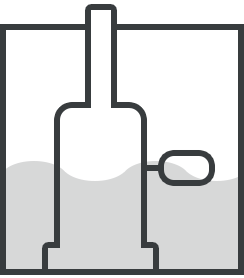
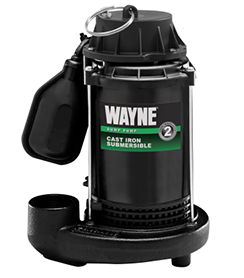
The pump and motor are combined in submersible pumps. They’re encased in a basin in your basement, submerged and is electrically sealed to prevent short circuits. Submersible pumps are quieter, take up less room in your basement, and clog less than pedestal pumps because they are totally submerged in the water basin. They may not last as long as other sump pumps due to the impact of water submersion. For homes with serious flooding concerns, this is still the best solution.

The pedestal pump’s motor is placed above the sump, making it easier to service while also being more visible. A long, vertical extension shaft drives the pump impeller, which is housed in a scroll housing at the pump’s base. The pump transfers water via the hose to the predetermined drain spot. Because the motor is not submerged, it has a longer lifespan than other sump pumps and is more easily accessible for maintenance. It can, however, be noisier and take up more room than the submersible pump.
A backup battery sump pump is an efficient technique to protect your home from flood damage. As your power goes out during a storm, a battery backup with a float switch allows your sump pump to continue to work. When the power goes off, the pump’s major source of power goes out with it. The float switch is actuated when the water level in the basin rises, which activates your battery operation.
Using higher water pressure, a water-powered backup clears the water in your basin. A water-powered system has the advantage of eliminating the need to monitor the backup or replace any batteries. The usage of more water greatly increases your water bill and is quite controversial. They are not permitted to be installed in some cities.
Sump pump switches come in a variety of shapes and sizes. A switch system can be used to control sump pumps. The pump can be turned on separately using a switch. Switches, on the other hand, work in a different way, even though they achieve the same result. The following are examples of several types of switches and how they work:
A float switch is a float that is attached to the pump and sits on the water’s surface. As the water level rises, the float rises with it, and the pump activates.
A pressure switch detects the amount of pressure in the water as it rises and, to a certain extent, starts the pump’s activity.
This switch works similarly to your diaphragm, flipping from concave to back when the pressure increases and falls, in and out. It’s the most popular because it doesn’t get stuck on or off very often.
The electrical switch is activated by monitoring the water pressure within the basin, rather than by a float. As the water level rises, the pressure rises as well, triggering the probes and turning on the pump.
Purchasing sump pumps can be challenging. It’s critical to choose the correct sump pump for your home’s safety. The majority of consumers select the submersible or pedestal pumps with features tailored to their specific requirements. Choose a pump with enough horsepower to manage the amount of water you’re dealing with. You’re still at risk of flooding if you choose a sump pump with less horsepower than is required for the level of flooding in your area. At the same time, a larger horsepower than required will induce cycling, or the pump turning on and off frequently, reducing the pump’s lifespan. A one-third horsepower submersible pump will suffice if you live in an average-sized home with an average quantity of rainfall that is not built deep into the water table. A one-half horsepower submersible pump can provide the extra power you need if your home is deeper into the water table, has larger seepage difficulties, or requires a longer drainage point. Finally, if you’re dealing with severe flooding, a more powerful sump pump you require.Generally, when selecting for a sump pump system, keep the following points in mind:
1. Select the Appropriate Horsepower for Your Needs.Pumps with more horsepower aren’t always better. If you don’t need a large pump, don’t put one in because it may fail early. Choose a smaller, more efficient pump instead.
2. Choose the Correct Float Switch.Although mechanical float activator arms are visible and easy to inspect, they can become trapped on occasion. Electronic switches are more streamlined and take up less space in your sump pit, but they’re also more difficult to replace.
3.Consider installing a sump pump backup system.
Some stores provide sump pump packages that include backup sump pumps. A backup is included into combination sump pump systems. If you don’t already have one, consider installing a backup sump pump. Some pumps have fancy extra characteristics like water alarm systems, and some even connect to Wi-Fi so that if they develop a defect, they can send signals to your smartphone or smart home. However, most homeowners can get by with simple, high-quality automated pumps.
