


Air source heat pump heating in winter
The air source heat pump is used as the cold and heat source of the central air conditioner. Its advantage is that one machine is used for two purposes. At least one four-way reversing valve is added inside the unit, which can switch between cooling and heating conditions and improve the utilization rate of the unit . When cooling, the condenser is air-cooled, eliminating the need for a cooling water system for water-cooled chillers. When heating, the heat pump operation mode is adopted, which saves energy and does not pollute the environment caused by the use of boilers.
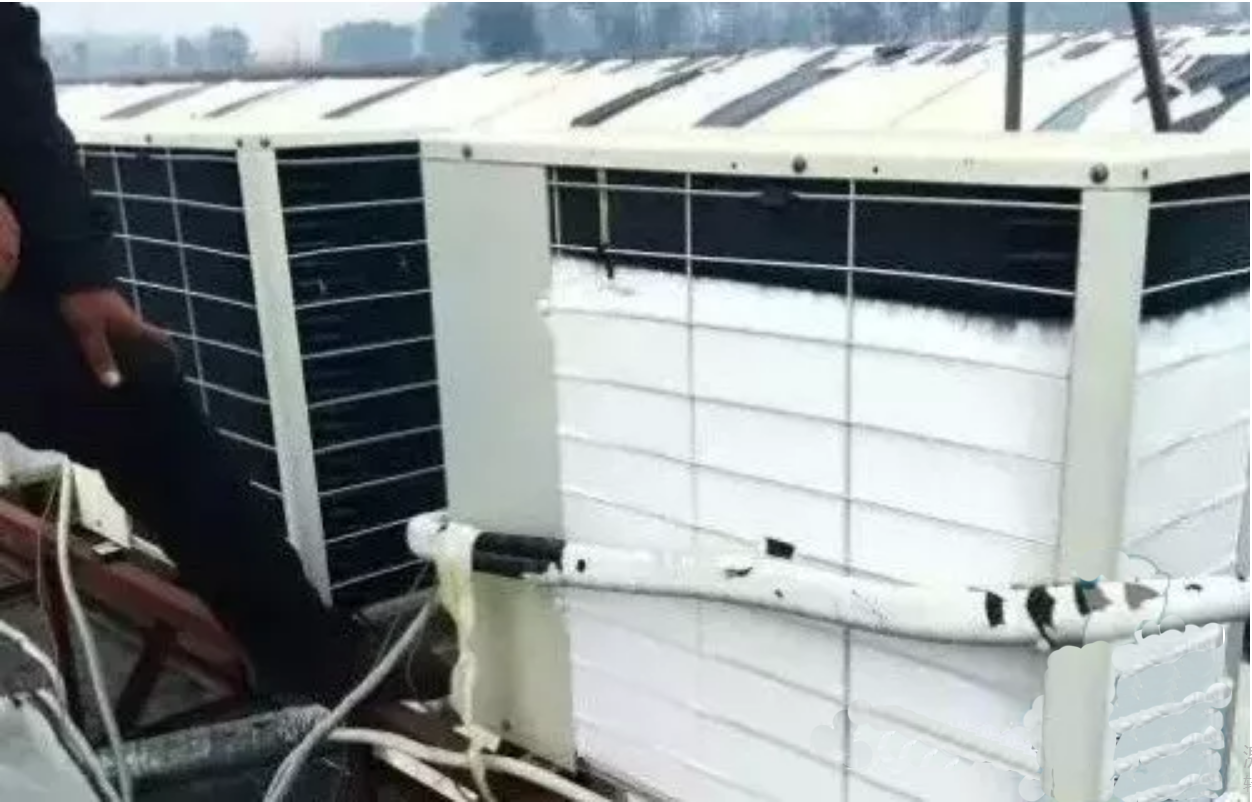
When the air source heat pump unit is running in winter, its finned coil heat exchanger acts as an evaporator. Due to the low evaporation temperature, the temperature of the coil surface also drops, even below 0°C. When outdoor air is driven by a fan to flow through the coil, the moisture contained in it will precipitate and adhere to the surface of the coil to form a frost layer. So in principle, frosting is a normal phenomenon for air source heat pumps, and there is no need to make a fuss.
It's not that frosting, the machine has a problem. Because any air source heat pump machine has an automatic frost function, as long as the machine can defrost normally, the heating effect on the heat pump system is minimal. So we need to pay attention to whether the machine can defrost normally. If the defrosting is abnormal, it will affect the heating effect of the machine.
The influence of the frost layer on the heating effect of the machine is mainly reflected in the following two aspects:
1. Affect thermal conductivity and thermal resistance
The frost layer increases the thermal resistance of heat conduction and reduces the heat transfer coefficient of the evaporator. In the early stage of frosting, as the frost layer increases the roughness and surface area of the heat transfer surface, the total heat transfer coefficient increases. With the thickening of the frost layer, the influence of thermal conductivity and thermal resistance gradually becomes the main influence on the heat transfer coefficient. When facing, the total heat transfer coefficient begins to drop again.
2, affect air flow
The increase of the frost layer increases the resistance of the air flowing through the finned tube evaporator and reduces the air flow. This effect on the performance of the evaporator is the main aspect of the negative effect of frosting.
Generally speaking, the greater the relative humidity of the outdoor air, the more severe the frost on the machine. Under the climatic conditions of the Yangtze River Basin, when the relative humidity of the outdoor air is less than 50%, the fin coils rarely experience frost. When the outdoor air temperature is lower than -5°C, as the temperature drops further, the air tends to become dry and frost formation decreases.
Then how to deal with the problem of machine defrosting failure?
Question: What should I do if the evaporator freezes locally?
Answer: This may be because there is no frost at the defrost sensor and the defrost point is not accurate. The solution is to manually force defrost and move the defrost sensor to the frosty place.
Question: What should I do if the evaporator does not defrost?
Answer: There are three possibilities, one is the defrost sensor, the ambient temperature sensor is faulty; the other is the lack of fluorine or the system is blocked; the third is that the four-way valve does not change direction. The solution is to replace the sensor; add fluorine according to the standard to remove the blockage; check whether the valve is energized and whether it is operating normally.
Question: What should I do if the defrost is not clean?
Answer: The problem may be that the temperature setting of the exit defrosting coil is too low, resulting in unclean defrosting. At this time, you need to adjust the defrosting parameters and observe patiently until the defrosting is over. It may also be that the sensor probe is not placed in a place where the frost z* is severe. At this time, just move the probe.
Question: What should I do if all the fins are frosted?
Answer: It may be because the temperature of the entering defrosting coil is set too low, or the defrosting time interval is set too long, and the defrosting action cannot be entered in time. You need to adjust the defrosting parameters to increase the temperature of the defrosting coil and shorten the defrosting time interval.
Question: What should I do if frost forms frequently in a short time?
Answer: The fin heat exchanger is blocked, the fan motor is damaged or the fan air volume configuration is too small. The solution is to clean the heat exchanger, repair and replace the motor.
